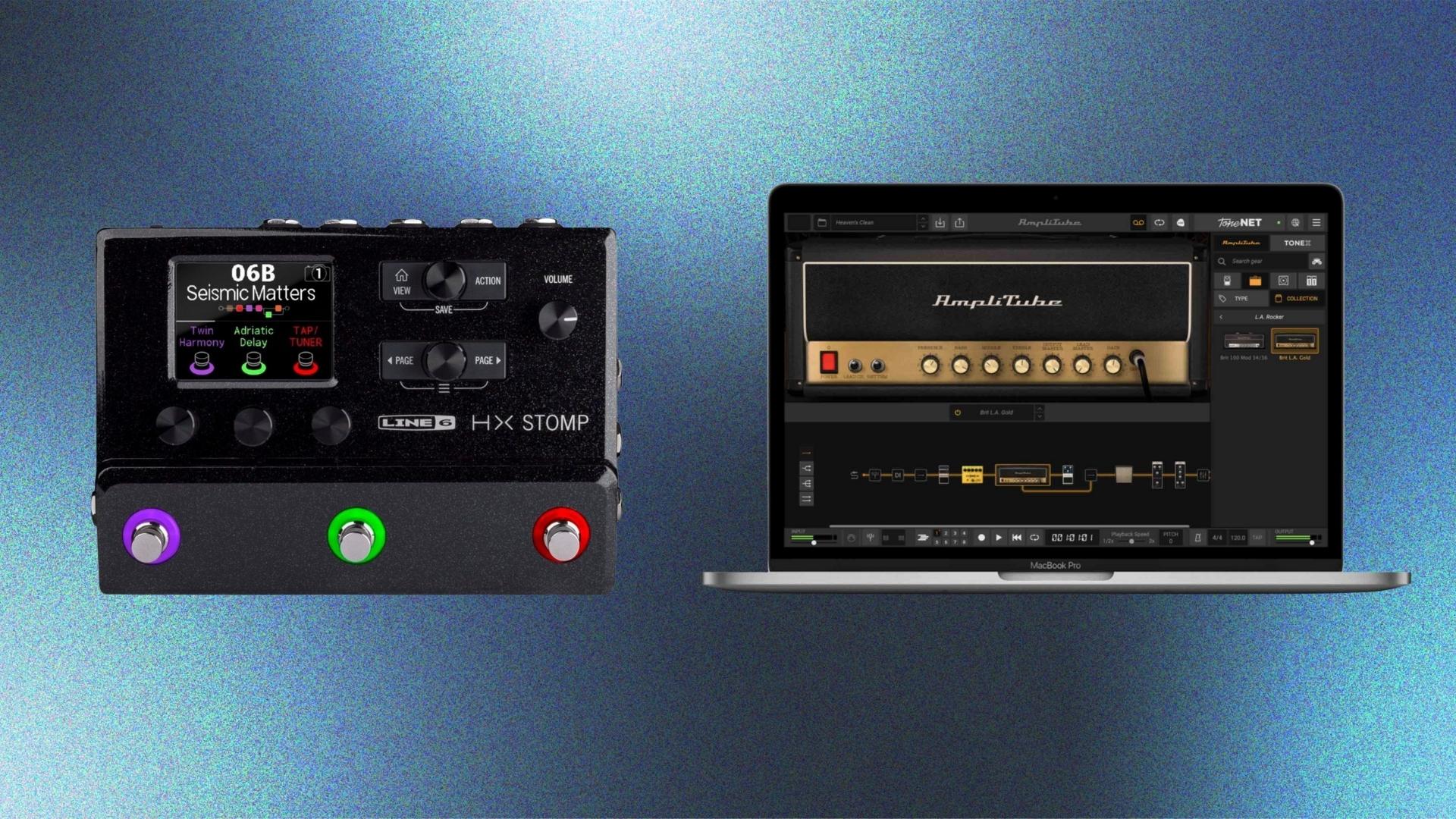
Getting a great guitar tone no longer means hauling around heavy amps. Today, amp simulation technology has changed the game. You can choose between amp sim pedals, compact devices that deliver ready-to-play tones on stage, and amp plugins, software tools that let you craft your sound directly in your DAW.
Both options replicate that warmth and dynamic feel of real amps, but they approach it differently. Amp sim pedals offer hands-on control and portability, while plugins provide flexibility and many tone options for recording and production.
Today, let's explore the key differences between amp sim pedals and amp plugins and help you decide which option fits your playing style, setup, and workflow.
What Are Amp Sim Pedals?
Amp sim pedals are hardware units that emulate the sound and response of a guitar amplifier. You can plug them directly into a PA system, audio interface, or headphones without a traditional amp. These pedals capture the sound of classic gear, including gain structure, EQ curves, and speaker cabinet resonance.
Here's what's best about amp sim pedals:
- Portability: Easy to carry and set up for gigs or rehearsals.
- Hands-on Control: Physical knobs and switches for quick tone tweaking.
- Consistency: Provides realistic sound without worrying about mic placement or room acoustics.
- Stage-Ready: Perfect for live performances where you want a full amp sound without hauling heavy equipment.
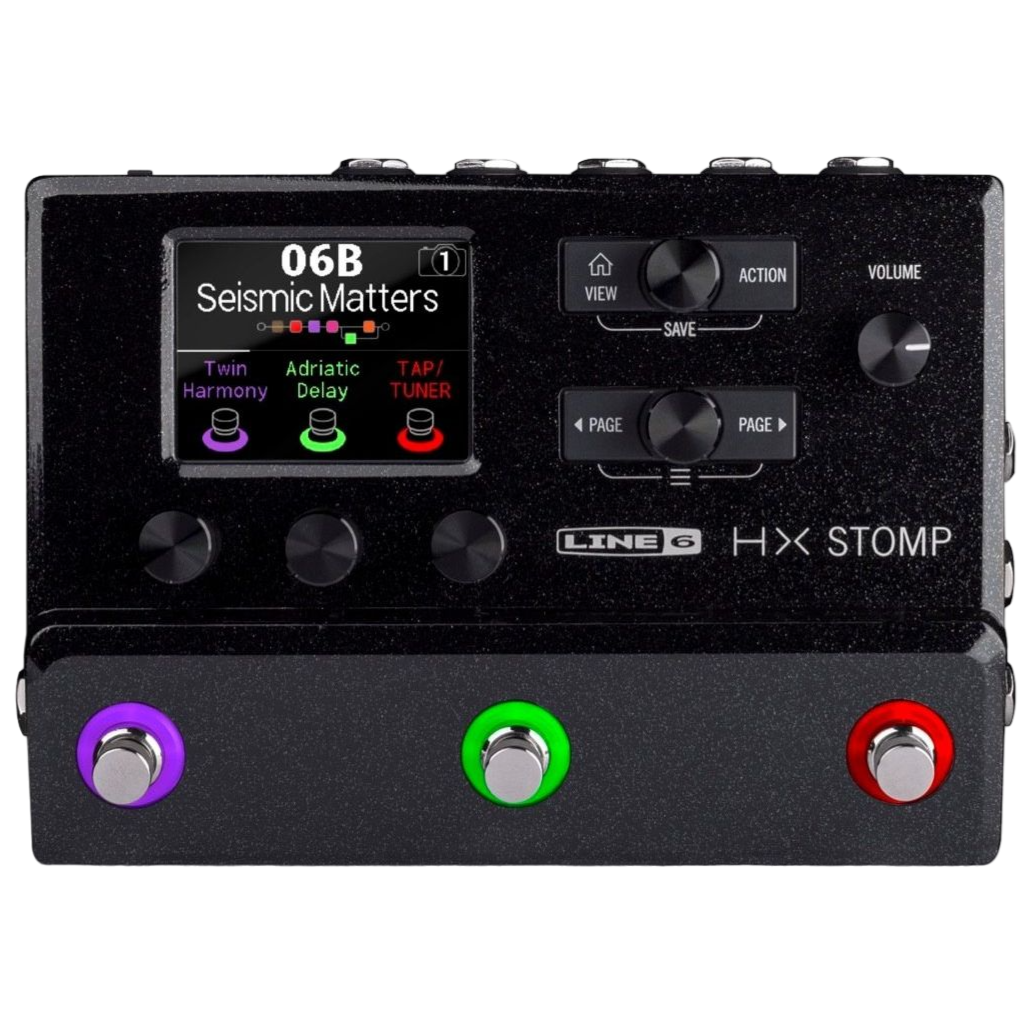
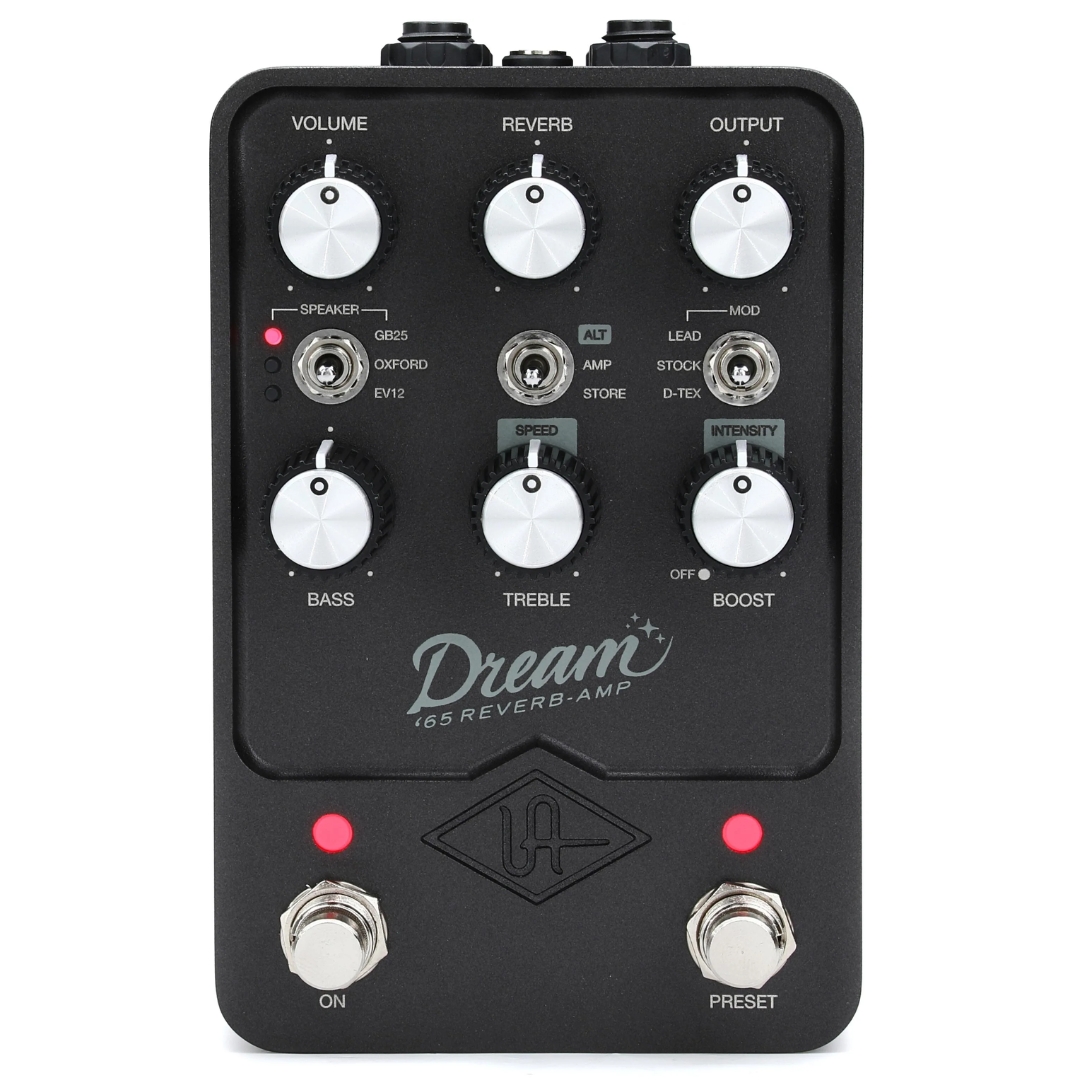
Popular examples of amp sim pedals include:
Line 6 HX Stomp
Universal Audio Dream '65
What Are Amp Plugins?
Amp plugins are software-based amp simulators that run inside a digital audio workstation (DAW) or as standalone apps. They replicate real guitar amplifiers, cabinets, and effects, allowing you to shape your tone entirely within your computer. Unlike pedals, plugins offer flexibility and depth, and feature multiple amp models, cabinet simulations, and effects chains.
Here are some key benefits of using amp plugins:
- Versatility: Load multiple amp and cab models without additional hardware.
- Studio-Friendly: Perfect for recording, mixing, and post-production.
- Customizability: Extensive control over tone, effects, and routing options that pedals can’t always match.
- Cost-Effective: Many plugins offer multiple amps in one package and cost way less than pedals.
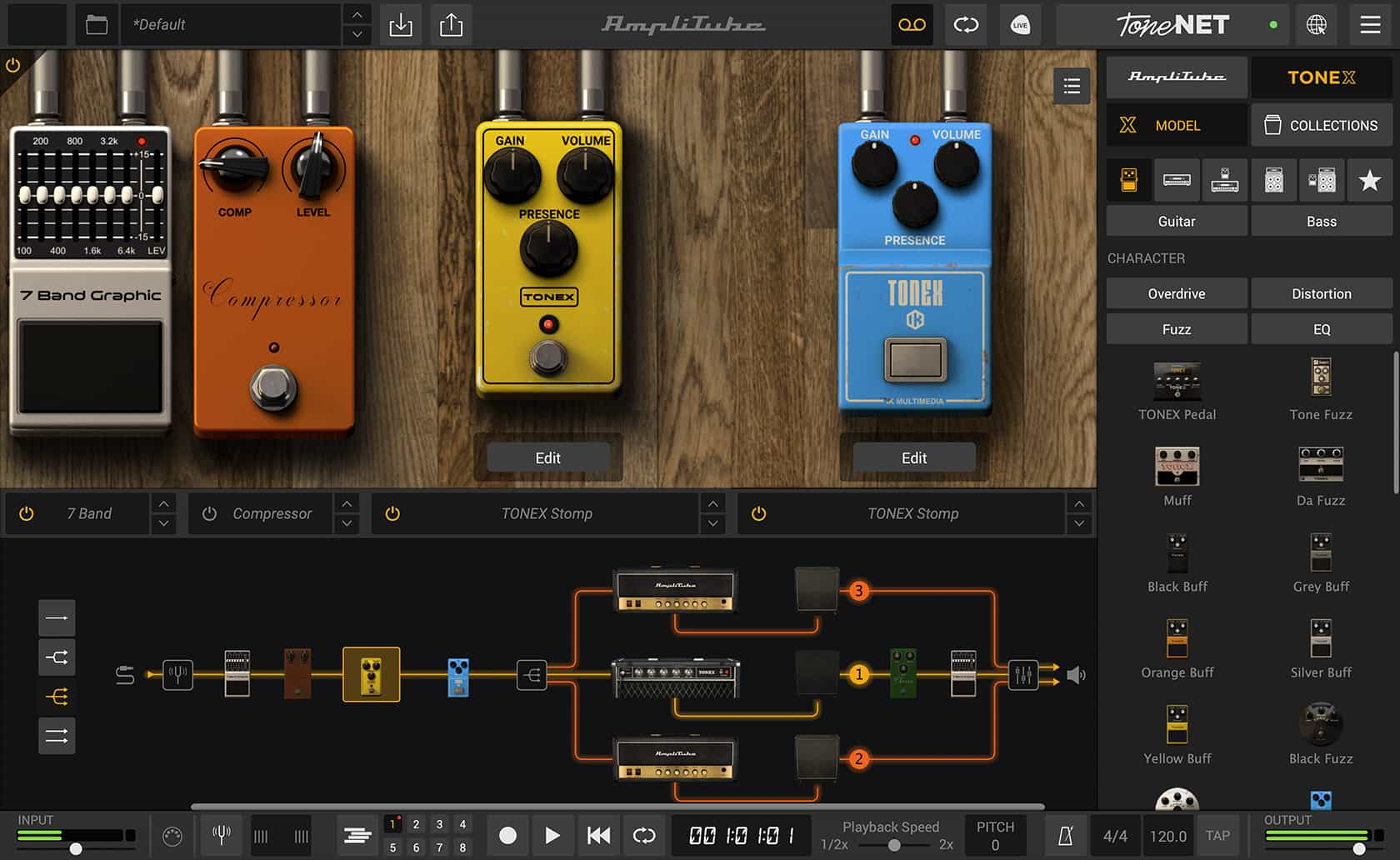
Popular examples of amp plugins include:
IK Multimedia Amplitube
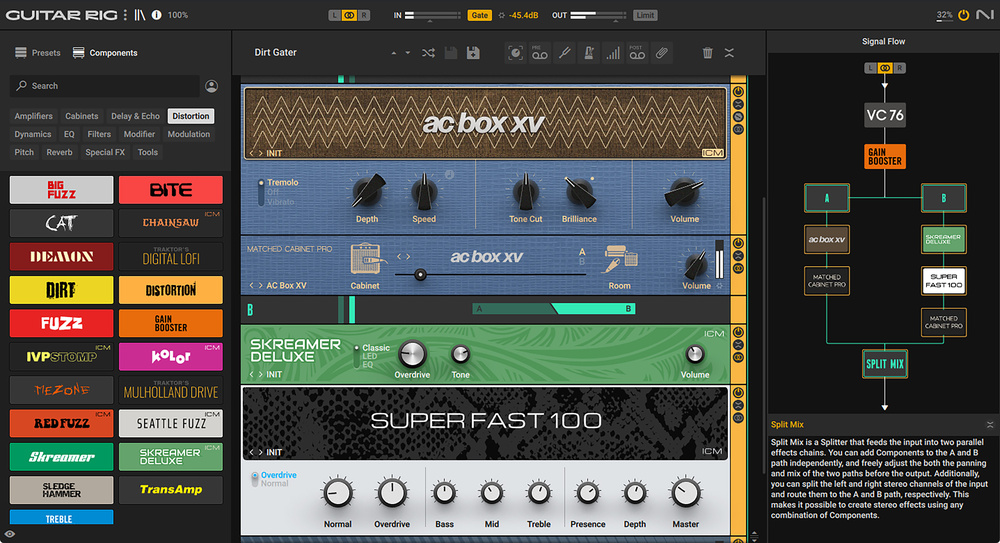
Native Instruments Guitar Rig
Tone Comparison: Do They Sound the Same?
Regarding tone, both amp sim pedals and amp plugins capture the essence of classic and modern amp models. However, how they achieve that sound differs, which can affect how they feel and respond when you play.
Realism and Dynamics
- Amp Sim Pedals: Often excel in playability and feel, and give you a more immediate, responsive experience. The interaction between your guitar and the pedal's circuitry can feel closer to a real amp, especially for dynamics, touch sensitivity, and gain response.
- Amp Plugins: Provide ultra-realistic modeling thanks to powerful digital processing. They can emulate multiple amps, cabs, and mic placements with extreme precision, but they rely on your audio interface and computer setup to minimize latency.
Tone Flexibility
- Pedals: Usually focus on one or a few amp types with physical controls for EQ, gain, and presence. Great for quick adjustments and stage use.
- Plugins: Offer infinite tone-shaping options, including multiple amp models, cabinet IRs, effects chains, and routing possibilities. Ideal for recording, experimentation, and mixing.
Latency and Response
- Pedals generally have near-zero latency, which is a must for live performances.
- Plugins can introduce slight latency depending on your computer, audio interface, and buffer settings, though modern systems minimize this effectively.
Both pedals and plugins can sound remarkably close to real amps, but pedals tend to give better feel and immediacy, while plugins dominate in flexibility and studio control. Your choice comes down to your priority: live playability or recording versatility.
Workflow and Use Cases
Choosing between amp sim pedals and amp plugins often comes down to how you play and where you use them. Each option has strengths for gigging, experimenting, and recording in the studio.
For Studio Musicians
- Amp plugins are a natural fit for recording and production. They integrate directly into your DAW, and you can tweak tones and experiment with different amp and cab combinations even after recording.
- Plugins allow automation, preset management, and complex signal routing.
For Live Guitarists
- Amp sim pedals shine on stage, providing consistent tone without relying on computers, low latency, and plug-and-play simplicity.
- Many pedals feature direct outputs and cab simulations, making them suitable for live PA systems or small gig setups without a traditional amp.
Hybrid Setups
Some guitarists combine both. For example:
- Plugins for pre-production and tone experimentation in the studio.
- Pedals for live performance to capture a reliable, amp-like feel.
This approach will give you maximum flexibility while maintaining a consistent sound across recording and performance environments.
Portability and Convenience
When it comes to setup and mobility, amp sim pedals and amp plugins offer very different experiences. Choosing the right option often depends on how and where you play.
Amp Sim Pedals
- Plug-and-Play: Pedals are ready to use with minimal setup, just connect your guitar and output.
- Compact and Lightweight: Great for gigs, rehearsals, and traveling musicians.
- No Computer Needed: You don't have to worry about software updates, system crashes, or audio interfaces.
Amp Plugins
- Require a DAW and Audio Interface: Plugins are best used with a computer, which can limit mobility and require more setup time.
- Preset Management: Plugins allow storing countless amp and effect setups digitally, which is convenient for studio use but less practical on stage.
- Portability Limitations: While laptops make them somewhat mobile, amp plugins still rely on reliable power, drivers, and low-latency audio hardware.
Price and Value
Cost is an important factor when deciding between amp sim pedals and amp plugins. While both can deliver high-quality tones, the investment and long-term value can differ significantly.
Amp Sim Pedals
- Price Range: Typically $200–$500 for quality pedals, depending on features and brand.
- One-Time Purchase: Once you buy a pedal, you own it, no subscriptions or updates required.
- Resale Value: Many pedals retain value over time, especially boutique or limited editions.
- Added Costs: Might need extra cables, power supplies, or pedals for additional effects.
Amp Plugins
- Price Range: Varies widely, from free plugins to premium bundles costing $200–$500+.
- Bundled Options: Many plugins offer a selection of amp models, cabs, and effects in one package, which can be cost-effective compared to buying multiple pedals.
- Subscription Models: Some developers offer updates via subscription, which can be cheaper upfront but add long-term costs.
- No Hardware Needed: Saves money on amps and physical cabling but requires a computer and audio interface.
Amp sim pedals are a solid one-time investment for live players, while plugins offer more tonal variety per dollar, making them ideal for studio-focused guitarists or those who want to experiment with multiple amp sounds. Your choice depends on whether you value hardware reliability or software versatility.
Which Should You Choose?
Deciding between amp sim pedals and amp plugins ultimately depends on your playing style, setup, and priorities.
Studio-Focused Guitarists
- Amp Plugins are ideal if you spend most of your time recording. They offer unmatched flexibility, multiple amp and cab models, and advanced tone-shaping options that fit seamlessly into a DAW workflow.
Live Performers
- Amp Sim Pedals are perfect for gigs. They provide reliable, stage-ready tone, low latency, and quick adjustments without relying on a computer.
Hybrid Players
- Using both can give the best of both worlds: plugins for pre-production, experimentation, and recording, and pedals for consistent live performance.
Final Thoughts
- Choose pedals if you prioritize portability, immediacy, and hands-on control.
- Choose plugins if you value flexibility, variety, and studio integration.
- Many guitarists benefit from combining both, depending on whether they're on stage or in the studio.
No matter which path you take, both amp sim pedals and plugins are powerful tools for shaping your tone, it's about finding what fits your workflow and musical goals.
Frequently Asked Questions
Can I Use Amp Plugins for Live Performances?
Yes, but you'll need a reliable laptop, audio interface, and low-latency setup. However, most live players still prefer amp sim pedals for their stability and simplicity on stage.
Do Amp Sim Pedals Work Well for Recording?
Absolutely. Many amp sim pedals feature direct outputs and cabinet simulation, allowing for easy, high-quality recording without miking an amp.
Can I Combine Amp Sim Pedals and Amp Plugins?
Yes. Many guitarists record using both, for example, capturing a pedal's output and adding plugin effects or cabinet IRs in the DAW.

Conclusion
Amp sim pedals and amp plugins are both powerful alternatives to traditional amplifiers. Pedals deliver hands-on control and portability, while plugins provide flexibility, infinite tone options, and seamless integration into the studio.
Take into account your workflow and playing style. Live performers will benefit from the convenience of pedals, but studio-focused musicians will appreciate the versatility of plugins. The key is to experiment and find the setup that inspires your playing.
Written by Ian Sniesko from DeathCloud, curating the finest guitar pedals for tone chasers and gear heads alike.
FREE TRAINING: 7 Ways to Write a More Effective Melody
Proven Tools for Any Melody, Any Genre...
Get the Guide – Worth $14 Free Today
I'll also send you additional free weekly content like the post above.